Showing posts with label UNESCO World Heritage. Show all posts

Sunday, 19 November 2017

All Roads Lead to Rome... but Hurry Up!


    Exactly one week ago I set foot in the Eternal City, for the first time after 18 years. Yes, it's a lot of time, and it is something different to look at everything through the eyes of an adult, as opposed to the eyes of a teenager. However, it is mandatory to mention that I was there on business, so I didn't have much time to be a tourist, and feel the vibe and personality of each place, as I normally like.  And Rome has a lot to offer, from all points of view. My tourist activity this time was fast (but not furious :P), and unfortunately, rather superficial. Therefore, I will give you 15 pills about Rome, as basic departure points. 


1. Rome is really the Eternal City. Nowhere do you feel as connected to such a distant past, as you feel when you are around the Roman Forum, Traian's Column, or the Colosseum. In fact, the historical city of Rome is part of the UNESCO World Heritage.


2. Rome is a meeting point for everything that means history, art and architecture. And you see this wherever you look. 

3. The city is very chaotic and very populated. It will not let you sleepwalk and relax while you visit, so you will feel the need to be in continuous movement yourself. 

4. Distances between one place and another are pretty long, even within the city center, and quite often the quality of the roads leave a lot to be desired. So, it's best to move around in metro.

5. If time is not on your side, try moving around in a hop on/ hop off tourist bus. You will get an overview of Rome's attractions.

6. Rome is mostly associated with scooters as a means of transportation. Think Audrey Hepburn and Gregory Peck in 'Roman Holiday'


7. You will see lots of funny trees on the roads around the city, and you may not have seen them anywhere in the world. Well, my dears, they are called domestic pines.


8. Few monuments are as somptuous as the Altare Della Patria, of Piazza Venezia, built in honour of King Vittorio Emanuele II.


9. The shores of river Tevere, with the view on St. Peter's Basilica or Castel St. Angelo, in autumn colours and under the rain, have something undeniably picturesque.

10. For Vatican visits you need an entire day, but it's absolutely worth it, whether you are religious or not. In fact, this small state within a state constitutes another UNESCO World Heritage associated with the Italian capital. This time, for me it was out of the question to make it, but I would still love to admire Michelangelo's Sistine Chapel and have a word with St. Peter one more time. ;)

11. Rome is also the home of Italian cinema, testified by the Cinecitta' studios. One of my other regrets is not having yet visited them, not even as a kid.

12. Romans are loud and chatty, but also very friendly. Plus, for some mysterious reason, in Rome selfies don't come out as nice as photos being taken by someone else. Which means that Rome must be enjoyed in company. So, travel with a friend or talk to the people around, and have your photo taken. 

13. The Trevi Fountain smells fresh and the water is clean. Don't forget to throw a coin in the water, in order to make sure you return to Rome, as the legend says.


14. One local dish that you must absolutely try is pasta cacio e pepe, which literally means cheese and pepper. Soothing and a little spicy at the same time. Actually, I tried a little variation: cacio e pepe lasagna with artichokes. :D


15. Last but not least, now that you just ate, there is a way to get rid of the extra calories without going to the gym. Climb the stairs of Piazza di Spagna! You'll be almost dead afterwards but it works. :P


    In conclusion, to visit Rome in depth, seeing everything that needs to be seen and without feeling like you're running a marathon, you would probably need 4-5 days. Therefore, this fast and brief visit obligated me to a sequel. But I promise that this sequel will be slow, and I will tell you much more about the Eternal City. Until then, as an old song said... arrivederci Roma!

Saturday, 21 October 2017

Helsinki: the City where You Recharge Your Batteries (Part 3)


      I told you I would have saved the best for last. And in this last part dedicated to Helsinki, we are focusing on those spots that you definitely shouldn't miss. Because each of them contains a little bit of Finnish soul, embraced in various forms.

1. The National Museum of Finland - where art and history meet


     Situated on Mannerheimintie, where we found ourselves for the first time in the previous 'episode', this was my own favourite (actually, disputing the first spot with another place). First of all, the building itself is remarkable - for lovers of classic architecture, it is like a cosy castle, both outside and inside. Towers, painted ceiling, windows in stained glass, plus the karhu.... I mean, the bear who greets you at the doorway makes things even cuter. 


    Secondly, the objects on display are really numerous, and you really get a sense that you are being taken through the history of Finland in all details, from the Middle Ages to contemporary days. Weapons, Lutheran religious art, artworks of all kinds, musical instruments, costumes, furniture, images of monarchs of times past, and so much more. And guess what: unlike in Romanian museums, you are allowed to take pictures without extra taxes being perceived. 


      As a temporary exhibition on the ground floor, I had the chance to find a photography exhibition illustrating the contemporary history of Finland, from its war of independence from the Russian Empire to the present day, with all the social movements and issues that the country has faced.


2. Kiasma, the Contemporary Art Museum - the modern and the quirky.


History comes face-to-face with modernity, in every sense. Just accross the way from the National Museum of Finland,  we find Kiasma, the Contemporary Art Museum. An ultra-modern glass building, hosting literally the craziest works of art that I've ever seen. After my visit there, I found myself in awe in front of the levels of immagination that the human mind can reach. 


At the souvenir shop on the ground floor, I became aquainted with the Muumi cartoon characters, which represent the theme of lots of souvenirs: calendars, mugs, notebooks, or wall pictures. They can be found everywhere, are not very new or modern (on the contrary, I'd say 'refreshingly old-fashioned'), but nevertheless very cute. 


3. Suomenlinna - history in tune with nature.


     From the old port, you can take the boat and head to Suomenlinna, an inhabited fortress expanding on various islands, and which is included in the UNESCO World Heritage. Its history starts in the 18th Century, and its role was to protect against Russian invasion. Afterwards, the fortess has been passed between Sweden and Finland. 


Now it is like an open-air medieval museum, with walls, tunnels,  gates, cannons and monuments. And on top of all that, nice and small wooden houses can be found from place to place, and yes, despite of the 'middle of nowhere, just you and nature' feeling, it is inhabited. 


4. Gallen-Kallela Museum - a hidden gem of genius


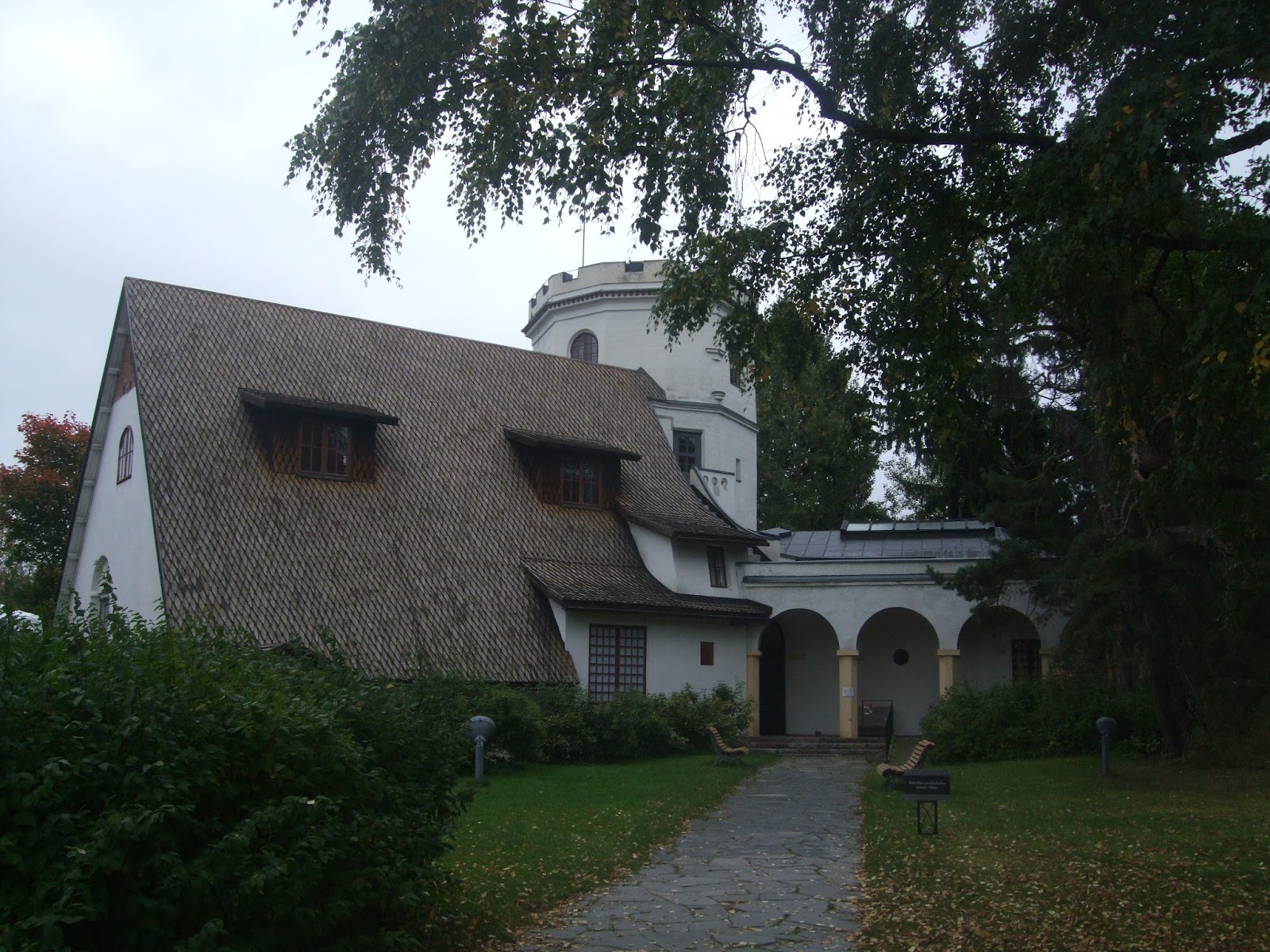
   Now, this is the place disputing the top spot with the National Museum of Finland. As you might already know, my favourite places to visit as a tourists are castles and memorial houses, because I believe they have the biggest degree of warmth and personality. Plus, if you think about the fact that people of value, who made a difference in history and culture, have been present in the same rooms, the energy you get from that is priceless. 
       On my last day in Helsinki, I arrived at the Gallen-Kallela Museum, which is actually outside the city, in Tarvaspää, close to the city of Espoo. You can get there by taking a bus from the Kamppi shopping center, and you have to buy a ticket from the driver. You cannot use the Helsinki public transport pass, as you go outside the city. Plus, as you get off, I have to warn you that you will have quite a long bit to walk, the castle is somewhere in the wood, and the signs leave quite a lot to be desired. Be armed with patience, have a map or even a GPS, and be ready to ask passers-by (you won't see so many of those either, so it's better if you go there accompanied).
      But once you get there I promise it is worth it. The museum is actually the house and studio of Finnish painter and sculptor Akseli Gallen-Kallela (1865 - 1931), and is a small castle projected by the artist himself. 


    I admit I wasn't aquainted with him and his works beforehand, but he is a key figure in Finnish art and history, and the museum provides exactly a full picture of his biography and works. It is a cosy and quiet spot in the middle of nature. And after the visit of the museum, I advise you to go for lunch at the cafe' nearby, which is a very pretty house inside and outside.

                                                   ****

And this was my Finnish adventure. I saw and learned quite a lot, on a relatively short visit, about a country which is not really 'in the spotlight' as a travel destination. However, it is absolutely worth it, from every point of view. Finland is art,  design, architecture, history, artisan work, nature, and last but not least, food. I am sure I will be back someday. Kiitos, Suomi! :)


Wednesday, 1 March 2017

Meet Mărțișor: Spring's Cutest Accessory


   If you have ever been to Romania, Bulgaria or Moldova at the beginning of March, you have surely seen these small accessories with red and white lace. It is called Mărțișor (or Martinitsa in Bulgarian), and it is offered to all girls and ladies in your family and entourage on the 1st of March, and they will wear it for the entire month. 


   The most popular Romanian version is the one worn like a broach, on the chest, consisting in a figurine to which the red and white lace is attached. There is also the bracelet version, but this one arrived later in Romania - actually, the first time I saw one was in Bulgaria in 2011. 


   There are numerous legends circulating about the significance of the colours red and white: red is generally thought to be the symbol of the blood of various supernatural creatures who defeated evil forces, and white is believed to symbolize either the melting snow, or the snowdrop, which is the first flower of spring. As for the figurines accompanying the lace, the 'classical' and more traditional ones are lucky objects, such as four-leafed clover, the ladybird, the horseshoe or the chimney sweeper, obviously meant to bring luck to the receiver. Alternative options include flowers, animals, cartoon characters, from Disney princesses to Minions, and all sort of cutesy stuff. 


     When I was little, I remember I used to bring a big bag of mărțișoare to school, for the teacher and all the girls in class. And afterwards I was returning home with the bag still full, with mărțișoare from all the other kids, and also the teacher. :) Nowadays, we don't receive them, nor wear them as much as in the past, but we still like them. It is another tradition still going on, or, better said, rediscovered. 
      That said, I wish all of you, girls and boys alike, to have a wonderful spring, which should see al your dreams come to life! ;)

Sunday, 13 November 2016

Athens: Chasing Greek Gods, Exploring Greek History (Part 1)


     Those of you who know that I was away last week, I am sure that you've been looking forward to know about my experience in Athens. And now is the time. Actually, this is the first of three portions. My trip to Athens was a 4 day city break, to celebrate my I-forgot-the-number birthday. :P It was not my first time in Athens: that happened when I was in high school, on a school trip, and the second time was 4 years ago, but it lasted less than 24 hours, before I embraked on the bus to Patra. Therefore, this was the time when I was grown-up enough to know what to explore, and how to explore a city.
    First and foremost, keep in mind that Athens is indeed full of history, which goes back 5000 years. And, when we think about ancient history, Athens and Rome are the ultimate places to be. This time though, we are talking about the 1st of the two cities. Sometimes we joke that we go to Athens to see rocks, but we know that it's simply amazing how these antique sites have lasted for milleniums, and they represent precisely the main charm of the city. So, let me take you through the most famous 'rocks' of Athens! ;)


     1. Acropolis

     Its name in Greek means exactly 'the high city', and is surely the most famous landmark of the Greek capital. Situated on the top of a hill, the Acropolis dominates over the rest of the city, and consists of several archeological sites making up a small citadel. It was also declared UNESCO World Heritage in 1987. We were very lucky to visit it for free, as it was a special offer of the first Sunday in November. Otherwise, visiting the Acropolis costs 30 euro per person. So, saving a significant amount of money for seeing the symbol of Athens was one heck of a birthday present! ;) Also, the fact that we arrived there at the first hour of the morning surely helped, as we had time to see everything before the place became packed with tourists. 


 As I said, the Acropolis comprises various parts, but seeing them will not take you more than 1-2 hours. Of all of the sites and temples, I will draw your attetion to the Parthenon, perhaps the most important landmark, although at the moment it's under reconstruction, so you won't see it in all its splendour. Afterwards, it is worth mentioning the Theatre of Dionysus, the Temple of Athena and the entry gate Propylaea. 


     2. The Ancient Agora

     Downhill from the Acropolis, you can find the Ancient Agora, what in ancient time used to be the main square of Athens, where the citizens used to gather for a wide variety of purposes. 


Also, this is an archelogical site which includes several components, of which the most important are the Odeon of Agrippa, the Temple of Hephaistos (which bears a striking resemblance to the Parthenon, so be careful not to confuse them), but also the Museum of Ancient Agora at the Stoa of Attalos, which is a picturesque setting in itself, and exibits several artworks and ancient remains. The Ancient Agora is like a park in which you can take a quiet stroll, and is not as full of tourists as the Acropolis. 


      3. Temple of Zeus and Adrian's Arch

      The last-but-not-least archeological setting, situated withing walking distance from Syntagma Square and right next to the National Gardens, Adrian's Arch was build in the 2nd century A.D., and it was meant to separate the old and new cities of Athens. Just as you cross it, you enter the site of the Temple of Olympian Zeus, where the entrance only costs 3 euros per person. This visit will be quick, but nevertheless worthy, as it is an ancient spot in the heart of this hectic city.


     In Part 2, we will be back with Syntagma Square and something which you should not miss about it, as well as two key museums encompassing the history of Greece, but also the perfect place for shopping in Athens.